The part other companies skip
Your panel decides what everything else costs.
Solar, batteries, EV chargers and heat pumps all land on the same service. If it cannot carry them, that is the project — and it should be priced before anything else is promised.
What actually lands on the board
These are typical continuous demands. A 100 amp service was designed for a house with none of them; a 200 amp service can usually take two, not four.
- EV charger, Level 2
- 40–50 A
- Heat pump, whole home
- 30–50 A
- Electric range
- 40–50 A
- Heat pump water heater
- 30 A
- Solar backfeed breaker
- 20–40 A
Roughly one Triangle home in four needs a service upgrade before an EV charger can be installed. Finding that out during the install rather than during the quote is how a $1,450 job becomes a $4,350 one.
What we check
- Existing service size confirmed at the meter, not guessed from the panel label
- A real load calculation against your actual connected loads
- Headroom stated in amps, so you know what else will fit
- Utility coordination timeline given up front
- Panel brand identified — Federal Pacific and Zinsco flagged honestly
- Written report you keep whether or not you use us
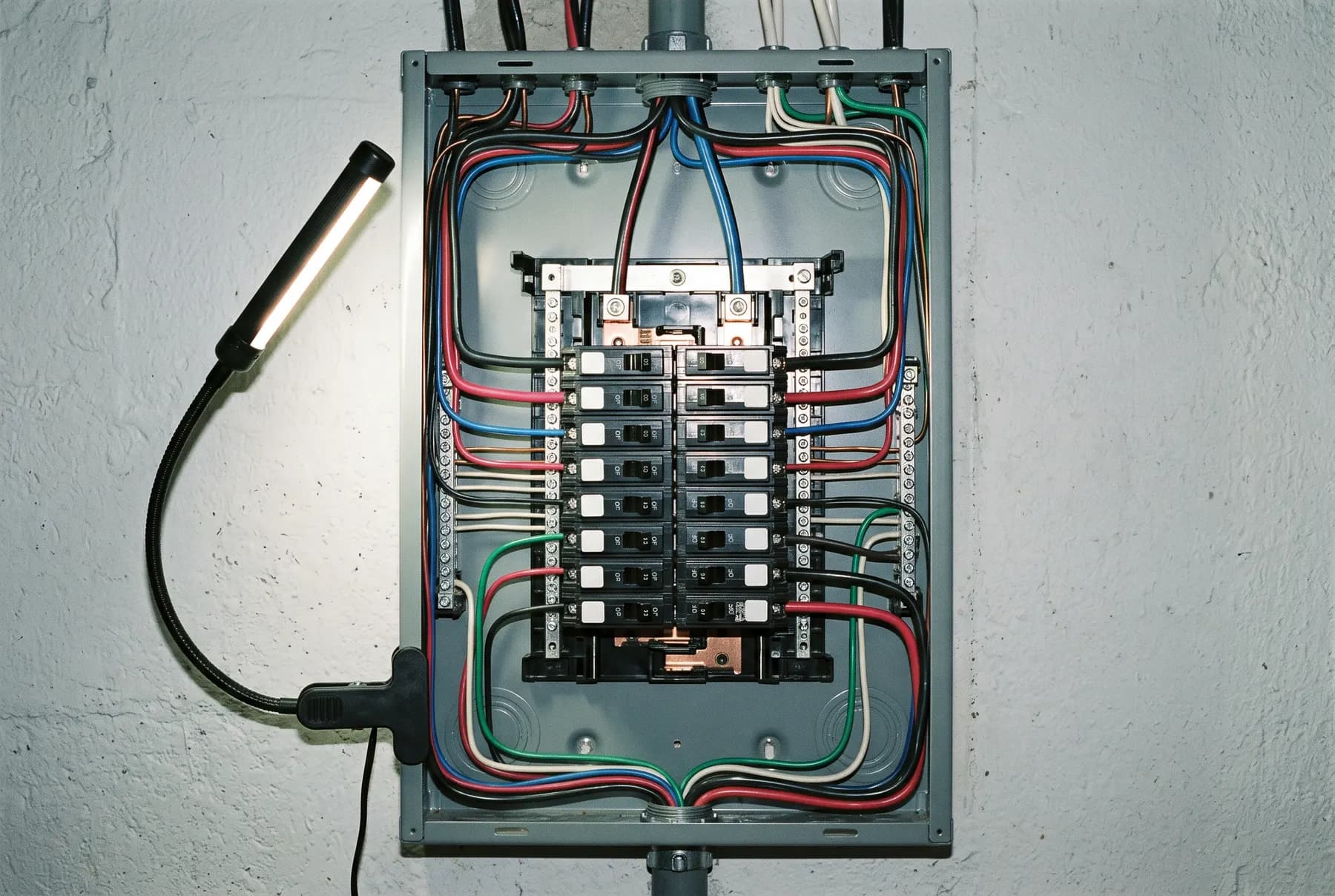
Federal Pacific and Zinsco
Both brands were installed widely between the 1950s and early 1980s and both have documented histories of breakers failing to trip under fault. If your Triangle home is from that era, there is a real chance you have one.
It is also a favourite scare tactic, used to sell upgrades that were not urgent. We will tell you what you have, what the evidence supports, and what we would do in your position — with the number and without the theatre.